



You just got off the phone with a candidate who asked, "So what exactly does this drug test cover?" Maybe a site manager needs workers cleared by Monday, and you need answers fast. This guide answers that question in under five minutes.
It breaks down what a drug screen 12 panel includes, when it makes sense for employers, how the testing process works, and how to stay compliant.

What Is a 12-Panel Drug Test?
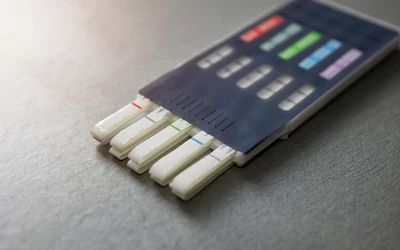
A 12-panel drug test is a urine test that screens for 12 categories of controlled substances and prescription drugs. It is a common broader configuration than a typical 5-panel or 10-panel, though many labs also offer expanded or custom panels beyond 12.
The word "panel" refers to how many drug categories are included. A 12 panel drug test cup checks for twelve. The specific substances within those categories can differ by provider, so confirm the exact test order when setting up your program. Some diagnostics labs may configure panels differently, so never assume every 12-panel is identical.
What Does a 12-Panel Drug Screen Test For?
Here is what a standard 12-panel drug test cup typically covers:
| Substance | What It Includes | Urine Detection Window |
| Amphetamines | Methamphetamine and other stimulants associated with increased energy | 1 to 2 days (varies by dosage and frequency) |
| Cocaine | A stimulant and common drug of abuse; cocaine metabolites are detectable in urine tests | 2 to 4 days |
| Marijuana (THC) | The most commonly flagged substance in employment drug screens; THC is detectable in the body longer with frequent use; state laws vary | 2 to 30 days |
| Opiates | Derived from opium including codeine, morphine, and heroin; note this does not include all opioids. Oxycodone and buprenorphine require separate testing | 2 days |
| Phencyclidine (PCP) | Commonly referred to as angel dust; included on standard panels because of its severe impairment effects | 14 to 30 days (longer for chronic users) |
| Barbiturates | Central nervous system depressants and sedatives prescribed for seizures, anxiety, or insomnia; short acting and long acting formulations differ significantly | 1 day to 3 weeks |
| Benzodiazepines | Includes Valium, Xanax, and Ativan; benzodiazepines are prescribed for anxiety and insomnia; they are often left off a basic 5-panel | 3 days to 6 weeks |
| Methadone | A synthetic opioid used in pain management; methadone presence is relevant for workplace impairment assessments | About 3 days |
| Propoxyphene | A pain reliever withdrawn from the U.S. market by the FDA but still appearing on standard 12 panel configurations | 6 hours to 2 days |
| Methaqualone | Rarely seen in current drug use but part of the standard configuration | Varies |
| Ecstasy (MDMA) | A synthetic drug with stimulant properties; MDMA use has been a concern among teenagers and young adults | 1 to 3 days |
| Oxycodone | A prescription opioid (OxyContin, Percocet); its metabolites require a separate test line because standard opiate assays may not detect them, which is why a 12 panel drug screen lists opiates and this category separately | Varies by formulation |
Detection windows are approximate and can vary significantly based on dose, chronic use, individual metabolism, and lab cutoffs. Some modern 12-panel configurations have dropped propoxyphene and methaqualone (because they are rarely prescribed or encountered) and replaced them with buprenorphine or other opioids. Always confirm the exact panel configuration with your lab or testing provider.
Key Confusion Points
Opiates vs. oxycodone. A standard opiate screening looks for codeine and morphine but may miss other opioids entirely. That is why a 12-panel lists them separately. Buprenorphine also requires an expanded panel. Multiple drugs can behave very differently in standard assays, which is why panel selection matters.
Stimulant prescriptions. Some candidates take prescribed ADHD stimulants like methamphetamine-based medications. A positive result does not automatically indicate abuse; the Medical Review Officer (MRO) contacts the donor to verify legitimate prescriptions from their doctors before finalizing results, which helps prevent false positives.
Marijuana and state law. Many states have legalized marijuana, but federal law still classifies it as a controlled substance. Factors like role type, industry, and local regulations all affect policy. Consult legal counsel before deciding your approach.
What About Fentanyl?
Fentanyl is the question employers raise most often about the 12-panel, and the short answer is that a standard 12-panel does not test for it. Fentanyl is a synthetic opioid, and its chemical structure is unlike the natural opiates a standard opiate screen is built to detect, so it does not cross-react with that assay. A negative opiate result does not rule out fentanyl.
Detecting it takes a dedicated fentanyl test, which KRESS can add as an expanded panel option. Federal workplace testing guidelines added fentanyl to the authorized panel in 2025, and DOT testing rules are still being updated, so DOT-regulated employers should confirm the current requirements before they finalize a program. If fentanyl is a real concern for your industry or your safety-sensitive roles, ask KRESS about expanded or custom testing.
When Should Employers Use a 12-Panel Drug Test?
High-Risk Roles
A 12-panel drug screen is a strong fit for safety-sensitive roles where impairment creates real risk: manufacturing, construction, transportation, oil and gas, healthcare, and any position requiring commercial driver's license clearance. Substance use in these environments can directly affect workplace outcomes, which is why broader coverage reduces blind spots.
Common Testing Scenarios
Pre-employment. Conducted after a conditional offer and before the start date. Do not allow candidates to begin work until results are reviewed. This is a best practice that KRESS recommends consistently.
Post-accident. Helps determine whether drug abuse may have been a factor in a workplace incident. Prompt collection is critical.
Random testing. Ongoing monitoring using documented, neutral selection processes. Random programs are especially common in regulated industries.
Reasonable suspicion. When a supervisor observes symptoms that lead to a reasonable belief of impairment. This requires training and documentation.
When a Smaller Panel Works
Not every role needs a 12-panel. KRESS offers smaller configurations so you can match coverage to each role category. A desk job with no elevated duties may not call for the same level of screening as a crane operator. Because some states limit which roles can be tested, when, and how, consult legal counsel when linking panel choice to specific positions or industries.
How the Drug Screening Process Works
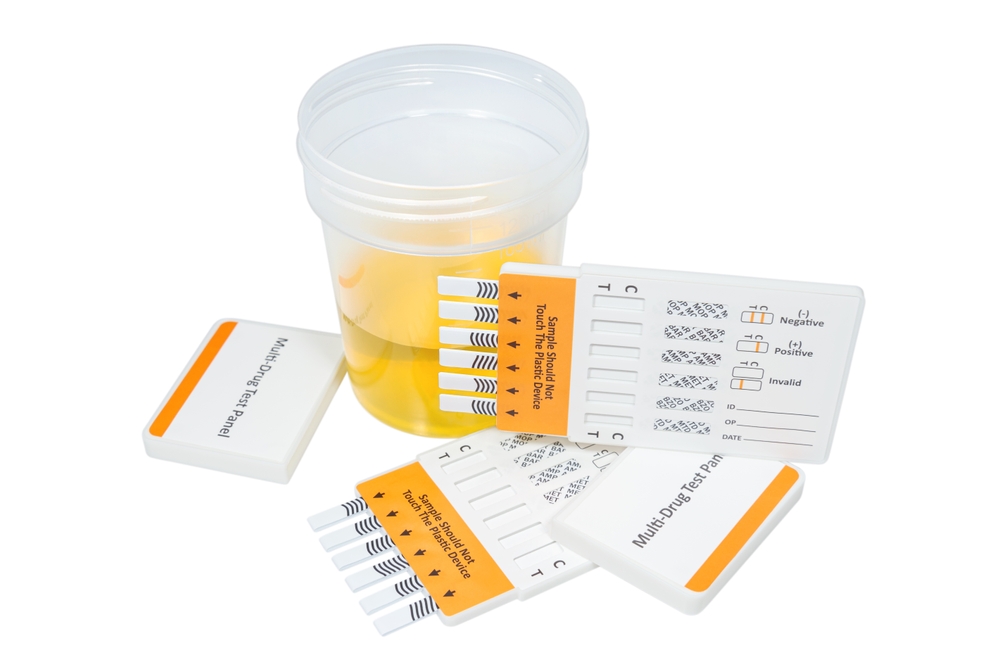
Most employment drug screens use urine sample collection at a certified lab or clinic. The candidate provides a sample under documented chain-of-custody procedures, making sure it is tracked from collection to result. Urine tests remain the standard because they offer a reliable balance between cost, detection windows, and the ability to identify detectable metabolites still present in the body after use.
Initial screening uses immunoassay technology. If a result is positive, the sample goes through confirmatory testing using gas chromatography/mass spectrometry (GC/MS) or liquid chromatography-tandem mass spectrometry (LC/MS/MS), a step that helps rule out false positives and produce an accurate outcome. A Medical Review Officer reviews confirmed positives, contacting the donor to verify any prescribed medications before the result is finalized as positive or negative.
For candidates: Prepare by staying hydrated, but do not overhydrate; excessively dilute urine samples may require retesting. Bring valid photo ID. If you take any medications, have that information available. If a family member has questions about what to expect, your employer or screening provider can walk them through it.
Compliance Basics for Employers
Write your drug testing policy down and apply it consistently. Inconsistent application is where problems start. If you test one warehouse candidate but not another, or use a 12-panel for one location and a smaller panel for the same role at a different site without a documented reason, you create risk.
Your policy should cover which roles require testing, which panel is used, when testing occurs, how results are handled, and what happens after a positive result. Audit-proofing your process starts with consistent documentation.
Before any screening, obtain written consent and provide required disclosures. If a drug test result influences a hiring decision and you used a third-party consumer reporting agency, follow FCRA pre-adverse action and adverse action steps, including providing the candidate with a copy of the report and a summary of their rights. State and local laws vary, and some jurisdictions restrict pre-employment marijuana testing or limit how results can be used. Verify the rules for each work location to protect your organization's health.

Ready to Set Up Your Drug Testing Program?
If you are building a new drug testing program or reviewing an existing one, KRESS can help you choose the right panel, set up a consistent process, and manage testing through a secure portal with U.S.-based support.
Frequently Asked Questions
What does a 12 panel drug screen test for? A standard 12-panel screens for amphetamines, cocaine, marijuana, opiates, PCP, barbiturates, benzodiazepines, methadone, propoxyphene, methaqualone, ecstasy (MDMA), and oxycodone. Barbiturates and benzodiazepines are two categories a basic 5-panel commonly leaves out.
Do employers use a 12 panel drug test? Yes. It is commonly used after a conditional job offer and before the candidate's start date, depending on the employer's policy.
How long can alcohol be detected on a 12 panel drug test? Alcohol is not included in a standard 12-panel drug screen. It requires a separate test, typically a breath alcohol test or urine alcohol add-on ordered alongside your panel.
What drugs don't show up on a 12 panel drug test? Many 12-panel configurations do not include fentanyl, synthetic cannabinoids, kratom, or certain designer drugs. Some also omit buprenorphine unless it is specifically ordered as part of an expanded panel. Talk to KRESS about expanded or custom panels if your risk assessment identifies a need to screen for these.
This article provides general information about 12-panel drug testing for employers. It is not legal advice. Consult qualified counsel about panel selection, marijuana policy, and state or local testing restrictions that apply to your organization.