





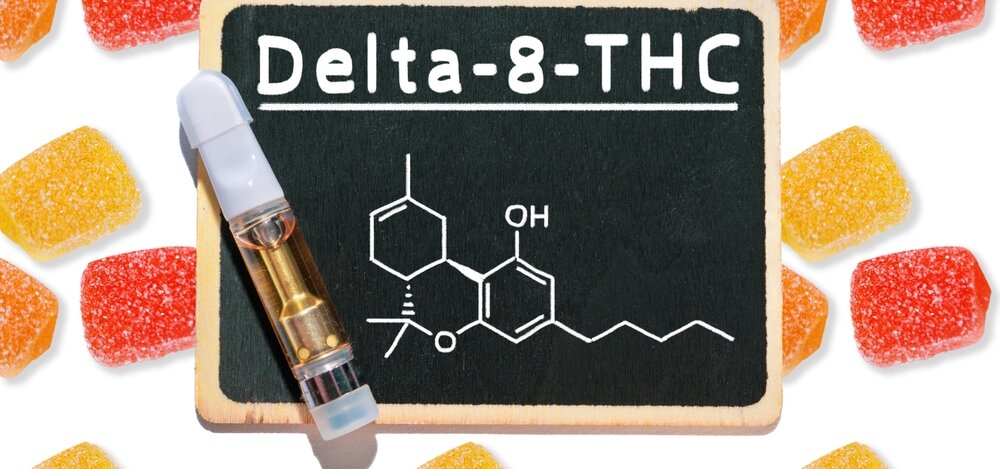
Your drug policy probably names "marijuana" and "delta-9 THC" and stops there. Two federal dates this fall will turn that wording into a liability, and they are not the same date. If you are the one who has to rewrite the handbook and then explain it to 300 employees before lunch, this is your checklist.
What is changing, and when
The 2018 Farm Bill defined hemp by one number: no more than 0.3% delta-9 THC by dry weight. Because it looked only at delta-9, manufacturers sold products loaded with other intoxicating cannabinoids, such as delta-8, THCA flower, and hemp vapes, while still labeling them legal hemp. That is the hemp loophole.
Public Law 119-37, signed in November 2025, closes it by redefining hemp on a total-THC basis. Congress then split the deadline. The Continuing Appropriations and Extensions Act, 2027, signed on September 2, 2026, holds most of the new definition back to December 11, 2026, leaving one piece on November 12: products containing cannabinoids a cannabis plant cannot naturally produce.
So on November 12, cannabinoids a cannabis plant cannot naturally produce stop counting as hemp. On December 11, the rest arrives: lab-converted cannabinoids such as delta-8 stop counting as hemp, total THC replaces delta-9 as the measure, the 0.4 milligram per container cap applies to finished products, and naturally occurring cannabinoids over the new limits stop counting as hemp too.
December 11 is also the date the current funding law expires, so Congress may move it again. Write your policy so it does not depend on either date holding. If you are already wrestling with the marijuana rule employers are getting wrong, this makes the fix urgent.
The new total-THC standard
Instead of delta-9 alone, hemp is capped on total tetrahydrocannabinols, including THCA. Raw hemp cannot exceed 0.3% total THC by dry weight, and finished products such as gummies, beverages, and tinctures cannot contain more than 0.4 milligrams of total THC and similar cannabinoids per container.
That container cap is the real disruptor. Most intoxicating hemp gummies carry 10 to 25 mg per piece, so a single gummy passes 0.4 mg many times over. The state-level version is already visible in the THCA ban in Texas and drug testing; the federal change now aligns the whole country.
How this changes employer drug testing
Here is what may surprise you: your panel probably does not need to change. Most urine, oral fluid, and hair panels, including a standard 12-panel drug screen for employment, already detect THC metabolites broadly.
The gap is on the interpretation side. For years employees believed their delta-8 or THCA products were legal, and some MROs accepted "I only used legal hemp" to clear a positive. That defense narrows on November 12 and closes on December 11. This is the gap KRESS helps employers close before a positive turns into a dispute.
7 drug policy changes to make before December 2026
Work these in order, and you will finish with a policy that holds up under the new standard.
1. Update your definitions of marijuana, THC, and hemp
Define marijuana and THC to include all tetrahydrocannabinols and their acids: delta-9, delta-8, THCA, delta-10, THCP, and any other isomers, whether plant-derived, synthetic, or lab-converted. Reference the new limits and state that any product over them is an illegal drug under company policy, however it is marketed. This one change kills the most common dispute: "But it was legal hemp."
2. Align testing panels and MRO guidance
Your science is probably fine; your interpretation framework probably is not. Confirm which THC analytes your panels detect and at what cutoffs, then update MRO protocols so "I used legal delta-8" no longer clears a positive. Make sure your decision matrix treats any confirmed, non-prescribed THC metabolite as a potential violation for non-protected roles, subject to state law.
3. Revise employee communications about CBD and hemp
Employees learn from product labels, not the Federal Register. Tell them that full-spectrum and broad-spectrum CBD with measurable THC may no longer be legal hemp, and that delta-8 gummies, THCA flower, and hemp vapes become marijuana on the dates above.
4. Reconcile the federal change with state cannabis laws
The federal definition does not override state legalization or off-duty protections, but it does change how hemp and marijuana are distinguished. Review each state where you operate to see whether protections attach to marijuana, cannabis, or hemp, and decide whether to hold strict federal alignment for safety-sensitive roles. The KRESS state-by-state compliance guide is a useful starting point.
5. Refresh accommodation and medical cannabis procedures
Update accommodation forms to ask about THC content and product type, not just whether someone uses medical cannabis. Once enforcement begins, hemp-derived products over the total-THC limits run through your existing marijuana accommodation process. There is no separate hemp exception.
6. Tighten rules for safety-sensitive and DOT-regulated roles
Here the tolerance for ambiguity is zero. Explicitly prohibit any intoxicating THC product for these positions, whether it is sold as hemp, CBD, or marijuana, and retrain supervisors so a hemp product is handled the same as marijuana.
7. Update vendor contracts and service configurations
Confirm your screening provider can supply updated policy templates for the total-THC standard, align panels, cutoffs, and MRO procedures with your revised language, and add contract terms requiring notice of future federal or state changes. If you are weighing whether your provider is equipped, review your substance abuse testing services setup now.
A 90-day implementation timeline
September: Audit every policy, handbook, and training document that mentions marijuana, hemp, CBD, delta-8, or THCA, and draft new definitions on the total-THC standard.
October: Finalize the updates with legal review for multi-state compliance, and align panels, MRO guidance, and interpretation with your provider.
By early November: Roll out employee communications and train supervisors, HR, and safety managers, so you are ready on November 12 rather than scrambling on December 11.
Frequently asked questions
When does the hemp loophole close?
In two steps. From November 12, 2026, cannabinoids a cannabis plant cannot naturally produce stop counting as hemp. The rest of the new definition, including the total-THC standard and the 0.4 mg per container cap, takes effect on December 11, 2026 under the funding law signed in September 2026.
Will delta-8 THC be illegal after November 2026?
Yes. Most commercial delta-8 is converted from CBD outside the plant, which puts it in the group that changes on December 11, 2026, along with the total-THC standard and the 0.4 mg per container cap. Only cannabinoids a cannabis plant cannot naturally produce change earlier, on November 12.
Can employees still use CBD without failing a drug test?
CBD isolate with zero or negligible THC should not cause a positive. Full-spectrum and broad-spectrum CBD with measurable total THC may exceed the 0.4 mg per container limit and could trigger one, so employees should read labels and know the threshold is changing.
Does the federal change override state marijuana laws?
No. State legalization and employee protections remain in effect. The reclassification changes how hemp and marijuana are distinguished, which affects policy language and may change which products fall under state protections. Employers in multiple states should review each jurisdiction.
Miss these updates and the risk is concrete: an employee can argue a positive should not count against a policy that names only marijuana or delta-9, sites enforce delta-8 inconsistently, and safety-sensitive employers carry audit and DOT exposure. KRESS can review your policy language, align your panels and MRO procedures with the total-THC standard, and tell you which of the two dates each change belongs to. Get a quote from KRESS and we will audit your drug testing setup before November 12.