


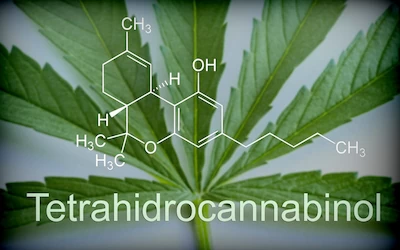





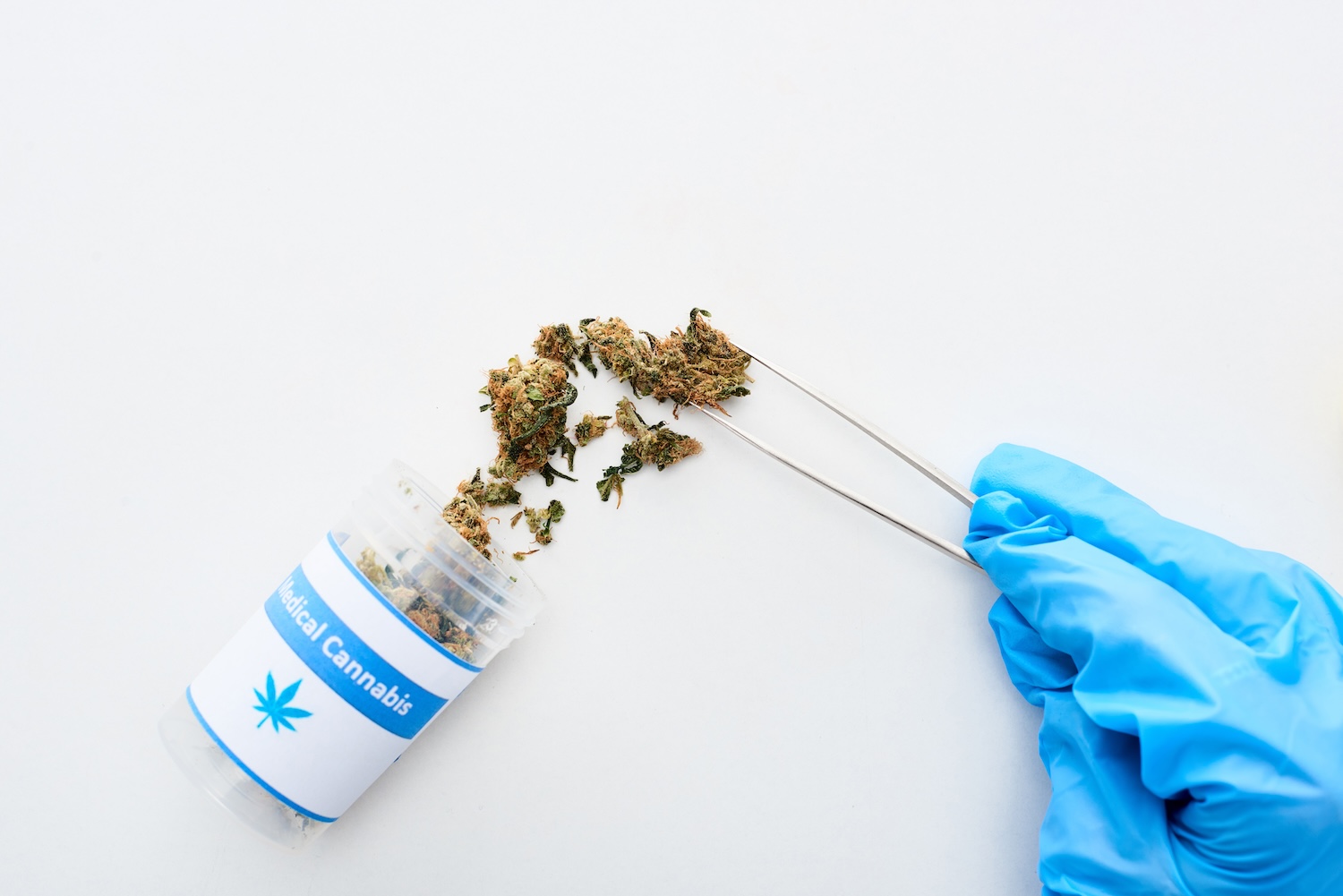
An executive order has directed the Department of Justice to finalize the process of moving marijuana from Schedule I to Schedule III. This would move the classification of marijuana from having no accepted medical use and a high potential for abuse (same category as heroin) to acknowledging some accepted medical use and a lower potential for abuse (same category as ketamine or certain steroids).
Until a final rule takes effect, marijuana remains Schedule I, and every DOT testing obligation your program carries today remains unchanged. What has changed is the volume of questions HR is fielding about whether any of this still applies. It does. Here is what the executive order actually means, what forward-looking risk it creates for employer testing programs, and what your program needs to have in place before your next audit.

The Risk Employers Are Not Talking About
Under current Health and Human Services rules, DOT and NRC mandatory testing panels only cover Schedule I and Schedule II substances. That is the regulatory framework that puts marijuana on your five-panel test. If marijuana moves to Schedule III without an explicit regulatory carve-out, it would no longer fall within the scope of those testing panels and could be removed from mandatory DOT testing entirely. What remains unsettled is whether the regulatory safeguards will be in place before the final rule takes effect.
KRESS monitors these developments so your team does not have to. If the final rule produces a change that affects your testing panel or documentation requirements, you will know before it affects your program.
Why Marijuana Still Raises Red Flags in Safety-Sensitive Roles
The case for maintaining testing does not rest on federal classification alone. It rests on how the substance behaves, and what that means for a workforce where impairment has consequences.
Marijuana impairs reaction time, attention span, and coordination. Those are not incidental functions. They are the core competencies that safety-sensitive roles depend on. What makes marijuana distinct from other substances on the DOT testing panel is how long it remains detectable after use:
- Marijuana (THC): up to 30 days for frequent users
- Cocaine: approximately 3 days
- Amphetamines: up to 5 days
A positive result does not require active impairment to violate DOT rules. An employee who used marijuana two weeks ago and tests positive has violated the requirement, regardless of whether impairment can be demonstrated at the time of the test. The standard is detection, not behavioral observation. That distinction matters when you are documenting a return-to-duty case or defending a termination decision, or responding to a post-accident review.
There is also a measurement problem that is worth understanding. Unlike alcohol, marijuana also has no scientifically accepted impairment standard equivalent to blood alcohol concentration. Until one exists, detection-based testing remains the only defensible measure available.
2026 Random Testing Rates by Agency
Federal agencies have held random testing rates entering 2026. For employers in transportation, logistics, construction, and energy, these are the rates that apply to your covered workforce:
- FMCSA (Federal Motor Carrier Safety Administration): 50% random drug rate; 10% random alcohol rate
- FTA (Federal Transit Administration): 50% random drug rate; 10% random alcohol rate
- PHMSA (Pipeline and Hazardous Materials Safety Administration): 50% random drug rate, no random alcohol requirement
- FRA (covered service and maintenance-of-way): 25% random drug / 10% random alcohol
- FRA (mechanical workers): 50% random drug / 10% random alcohol
These rates reflect an enforcement posture that has not moved in response to rescheduling discussions. The regulatory environment around marijuana classification is in motion. The testing environment is not.
What Programs Must Cover
Testing obligation spans five categories. All five require documentation:
- Pre-employment
- Random selection
- Post-accident
- Reasonable suspicion
- Return-to-duty and follow-up
The five-panel urine test remains: marijuana (THC), cocaine, amphetamines, opioids, and PCP. Urine test cutoff levels remain at 50 ng/mL for screening and 15 ng/mL for confirmation. Every stage: consent forms, selection logs, lab results, and MRO review must be traceable.
If you manage mixed workforces (some DOT-covered, some not), keep those policy sections separate. A combined policy creates ambiguity that does not hold under scrutiny.
How Employers Can Stay Compliant in 2026
Audit-ready means when a result is questioned (by legal counsel, a regulator, or an employee disputing an outcome), you can show exactly what happened, who reviewed it, what the decision was, and what step came next.
The elements that make a record defensible:
- Written consent collected before testing occurs
- Documented random selection method and pool composition
- Verified collector and laboratory credentials on file
- MRO review is completed on every result, not selectively
- Escalation path documented before an exception occurs, not after
- Policy is current with DOT standards as of the date of each test
If any of those elements are missing or inconsistent, the record has a gap. Gaps are where liability enters. not just from regulators, but from employees who know how to identify a procedural weakness.
Where KRESS Fits
KRESS manages the testing logistics and tracks the regulatory environment, so documentation holds, and programs aren't caught off guard if rules change.
What that means for your workflow:
- Nationwide DOT-compliant collection network
- MRO review on every result
- Turnaround confirmed in writing, not estimated
- Background checks and drug testing under one traceable record trail
- Regulatory monitoring: if the rescheduling process produces a rule change that affects your testing panel or documentation requirements, you will know before it affects your program
What disappears: result-chasing, credential verification on individual collectors, manual log reconciliation, and the gap between a positive result and a documented next step.
You provide the roster and the policy. KRESS manages the screening steps, candidate touchpoints, and escalation when something requires review. You approve exceptions. You do not chase them.
Common Employer Questions About Marijuana Testing in 2026
Q1. Does marijuana rescheduling change DOT testing rules?
No. The executive order directed the DOJ to complete the rescheduling process. It did not complete it. Marijuana remains Schedule I. All DOT testing obligations are unchanged today.
Q2. Can a state’s legalization block my right to test?
No. Federal jurisdiction governs DOT-covered positions. Your testing requirement is defined by 49 CFR Part 40 and the agency-specific regulations that apply to your workforce, not by the state laws where your employees are licensed or based.
Q3. Can I test non-DOT positions?
Yes, with written consent and a policy that meets applicable state law requirements. If you have both DOT-covered and non-DOT positions, document them under separate policy sections. A combined policy creates ambiguity that does not serve either program.
Q4. How long does THC stay detectable?
Up to 30 days for frequent users. Detection depends on body composition and test type, but the risk window is always longer than most expect.
Q5. What’s the best way to store compliance documentation?
Accurate, documented results with a clear chain of custody and a defined dispute process. KRESS manages recordkeeping to FCRA standards so every result is verifiable, every step is logged, and every decision can be explained.
Q6. What happens to DOT testing if rescheduling is finalized? That depends on whether the final rule includes a regulatory carve-out. Under current HHS rules, DOT testing panels only cover Schedule I and II substances. Without an explicit carve-out, marijuana could be removed from mandatory testing panels when it moves to Schedule III. Safety organizations are actively pushing for that protection. The outcome has not been confirmed. KRESS will issue guidance when the rule is finalized.
What to Watch and What to Do Now
The open question for the next 12 to 24 months is whether the final rule includes the carve-out that keeps marijuana on the DOT testing panel. That outcome is not guaranteed. It is being actively contested by the organizations whose members depend on it. And it will have direct implications for your program when it is resolved.
No policy changes are required today. What is required is awareness and a partner who is watching the regulatory process, so your team does not have to carry that on top of everything else.
If you want to know where your current program stands before the rules change, learn more about substance abuse testing services or contact our team if you’re ready to simplify your program.
Related Resources: