





Adverse action is the highest-risk moment in any background screening workflow.
Most employers know they need a process for it. Fewer realize how many lawsuits, settlements, and state agency actions hinge on whether that process was followed step by step. The Fair Credit Reporting Act (FCRA) sets the notice and timing requirements. The EEOC's Title VII enforcement guidance and a growing list of state and local fair chance laws add the individualized assessment requirement on top. Together, those rules create a four-step process every employer should know.
This post walks through the four steps, explains why accuracy matters at every stage, and shows how KRESS Automated Adverse Action supports the workflow without taking the hiring decision out of the employer's hands.
The Four-Step Adverse Action Process
Step 1: Conduct an Individualized Assessment
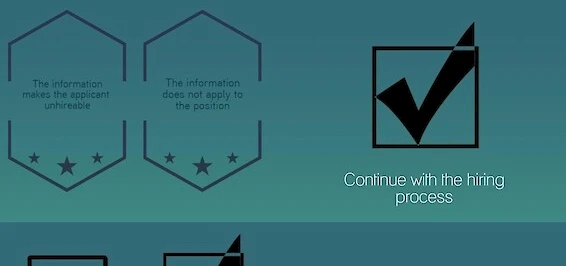
Before any adverse action notice is sent, the employer should consider whether the information in the report is actually relevant to the role. This step is called an individualized assessment. The EEOC's 2012 Title VII enforcement guidance sets a three-factor test that most state and local fair chance laws also follow:
- The nature and gravity of the offense or conduct
- The time that has passed since the offense or completion of the sentence
- The nature of the job held or sought
The candidate should also be given a meaningful opportunity to provide context, including evidence of rehabilitation. States and cities including New York, California, Philadelphia, Massachusetts, and Illinois require a written individualized assessment as a condition of any adverse action based on criminal history.
The individualized assessment is the employer's responsibility. KRESS provides optional templates and workflow support; the assessment itself, the documentation, and the decision that follows belong to the employer.
Step 2: Send a Pre-Adverse Action Notice
Under the FCRA, if the employer is considering declining a candidate based on the report, a pre-adverse action notice must be sent before any final decision is made. The notice must include:
- A copy of the consumer report the decision is based on
- A copy of the FTC's Summary of Your Rights Under the FCRA
- Contact information for the consumer reporting agency (CRA) that prepared the report
- A clear statement that the CRA did not make the adverse decision and cannot explain the reasoning behind it
Step 3: Observe a Reasonable Waiting Period
The FCRA requires a reasonable waiting period between the pre-adverse and final notice. It does not specify the number of days, but the widely accepted floor is five business days. State and local laws extend this further, with examples including:
- New York City: at least three business days from receipt
- California: at least five business days, with longer windows in some local jurisdictions
- Philadelphia: at least 10 business days under the 2026 Fair Chance Hiring Law
Most KRESS clients are configured for a 5 to 14 day waiting window, set during onboarding to match the candidate's jurisdiction.
Step 4: Send the Final Adverse Action Notice
Once the waiting period has passed and the employer has decided to proceed, the FCRA requires a final adverse action notice. It must include:
- A statement that adverse action has been taken based in whole or in part on the consumer report
- Contact information for the CRA that prepared the report
- A clear statement that the CRA did not make the adverse decision and cannot explain the reasoning behind it
- Notice of the candidate's right to dispute the accuracy or completeness of the information in the report
- Notice of the candidate's right to a free additional copy of the report from the CRA within 60 days
Why Accuracy Matters at Every Step
A background check report can include records that are simply wrong. Common names, shared dates of birth, and shared addresses produce false matches. A Michael Smith or a Jane Black can show up tagged with another person's criminal history. If a hiring manager sees that record and acts on it without giving the candidate a chance to respond, the employer ends up liable for a decision made on bad data.
The adverse action process exists to prevent this. The waiting period between the pre-adverse and final notices gives the candidate the time to dispute inaccurate information. The individualized assessment forces the employer to consider whether the record, even if accurate, actually disqualifies the candidate from the role in question.
At KRESS, every consumer report we deliver is manually reviewed. We verify the identity behind each record, cross-check against multiple sources, and remove data that does not belong to the candidate. The goal is to reduce false matches before the report ever reaches the employer, so the adverse action process is built on accurate information.
Who Is Responsible for the Hiring Decision and Compliance?
All hiring decisions, including whether to proceed with adverse action, are made solely by the employer. KRESS does not make employment decisions or determine candidate eligibility. KRESS facilitates the adverse action process by sending the required notices and managing timelines, including:
- Pre-adverse action notice
- Waiting period
- Final adverse action notice
Due to the frequency of regulatory changes across jurisdictions, KRESS does not guarantee identification or enforcement of all individualized assessment or local compliance requirements. Clients are responsible for consulting their legal counsel and ensuring their hiring practices meet all applicable laws.
How KRESS Automates the Workflow
Automated Adverse Action is included with every KRESS account. The workflow is:
- The employer reviews the report and conducts the individualized assessment
- The employer notifies KRESS that adverse action is being considered
- KRESS sends the pre-adverse action notice with the required FCRA documents
- The system tracks the waiting period configured for the candidate's jurisdiction
- KRESS sends the final adverse action notice once the employer confirms the decision
- A full audit trail is maintained, capturing every notice, every timestamp, and every document delivered
Waiting periods, notice templates, and jurisdictional prompts are configured during onboarding to match each client's compliance requirements. All hiring decisions remain with the employer at every stage.
Get Started
If you would like to review your current adverse action workflow or set up Automated Adverse Action for your team, contact KRESS today.