







Hawaii Employment Screening Overview
Hawaii has relatively restrictive employment screening rules, including a ban-the-box law requiring conditional job offers before criminal history inquiries, strict lookback limits of seven years for felonies and five years for misdemeanors, and comprehensive restrictions on credit check usage for most positions.
Federal requirements and local ordinances may still apply.
What's Permitted
- Criminal history inquiries permitted only after conditional job offer for most employers
- Credit checks allowed post-offer if rationally related to job duties
- Drug testing permitted with mandatory state procedural requirements
- Considering voluntary, unprompted salary history disclosures from applicants
What's Prohibited
- Asking about criminal convictions before a conditional job offer
- Considering felony convictions older than seven years, misdemeanors older than five
- Inquiring about or relying on applicant salary history
- Using credit history for most positions without a conditional offer first
Ban the Box Laws
StatewideStatus Summary
Hawaii's ban-the-box law (HRS §378-2.5) applies to most public/private employers, with statutory exemptions; bars pre-offer conviction inquiries; requires conditional offers; limits review to job-related convictions within 7 years (felony)/5 (misdemeanor), excluding incarceration; arrests without conviction barred; enforced by HCRC.
Key Requirements
Hawaii Revised Statutes §378-2.5
State ban-the-box statute: https://data.capitol.hawaii.gov/sessions/sessionla... https://labor.hawaii.gov/hcrc/files/2020/09/Arrest...
- No conviction inquiries before conditional offer.
- Felony convictions: seven-year lookback period.
- Misdemeanor convictions: five-year lookback period.
- Exclude incarceration time from calculations.
- Require individualized rational‑relationship assessment.
Act 51 (SB2193, 2020)
2020 amendment narrowing lookback periods: https://data.capitol.hawaii.gov/sessions/session20... https://data.capitol.hawaii.gov/sessions/sessionla...
- Reduced felony lookback to seven years.
- Reduced misdemeanor lookback to five years.
- Lookback excludes incarceration time.
- Effective September 15, 2020.
Act 88 (H.B. 777, 2023)
DHS exception for vulnerable-population roles: https://labor.hawaii.gov/hcrc/files/2023/11/Act-88...
- DHS may seek broader criminal history.
- Applies to employees, volunteers, contractors.
- For positions near minors or vulnerable adults.
- Effective June 14, 2023.
HRS §378-2 (Arrest and Court Record)
Arrest-record protections and HCRC guidance: https://labor.hawaii.gov/hcrc/files/2020/09/Arrest...
- Arrests without conviction prohibited consideration.
- DAG and DANC not treated convictions.
- Enforced by Hawaii Civil Rights Commission.
- Complainants must file within 180 days.
Ban the Box Best Practices for Hawaii Employers
- Remove criminal-history questions from applications and initial screening
- Conduct conviction inquiries only after a conditional job offer
- Respect lookbacks: felonies 7 years; misdemeanors 5; exclude incarceration
- Make individualized assessments linking convictions to specific job duties
- Provide notice, FCRA pre-adverse steps, and opportunity to respond
Salary History Ban
StatewideHawaii Revised Statutes §378-2.4 — Salary History Ban
Prohibits employer inquiries and reliance on prior pay:
- No asking applicants about salary history
- No reliance on prior pay
- Applies to employers and employment agencies
- Voluntary disclosures may be considered
- Background-check revelations cannot set pay
Sources: HRS §378-2.4 (law) — https://data.capitol.hawaii.gov/hrscurrent/Vol07_C... ; HCRC FAQ — https://labor.hawaii.gov/hcrc/faqs/
Act 203 (SB 1057) — Pay Transparency & Equal Pay Expansion
Expands equal-pay protections and requires pay posting:
- Equal pay protections for all protected categories
- Employers with 50+ employees must post ranges
- Ranges must reasonably reflect expected compensation
- Exempts internal transfers and collectively bargained positions
- Enforced by Hawaii Civil Rights Commission
Sources: Act 203 Pay Transparency FAQs — https://labor.hawaii.gov/hcrc/files/2023/11/Act-20... ; Act 203 (session law, SB 1057 CD1) — https://www.capitol.hawaii.gov/sessions/session202...
Important Distinction
Hawaii's statute expressly defines “inquire” to include searching publicly available records and applies to any employer with at least one Hawaii employee, regardless of employer location. https://data.capitol.hawaii.gov/sessions/session20... https://labor.hawaii.gov/hcrc/faqs/
Salary History Best Practices for Hawaii Employers
- Do not ask about applicants' salary history.
- Do not rely on prior pay in compensation decisions.
- Allow voluntary, unprompted salary disclosures and verify if provided.
- Segregate or flag incidental salary data from background reports.
- Post pay ranges for positions if you have 50+ employees.
Consumer Credit Checks
RestrictedHawaii law (HRS §378‑2.7) prohibits employer credit inquiries pre‑offer; exceptions: managerial/supervisory, federally‑insured financial institutions, and positions required by law; enforced by HCRC; civil fines $250–$2,500; criminal penalties possible. https://labor.hawaii.gov/hcrc/files/2013/01/HCRC_C... https://labor.hawaii.gov/hcrc/
Key Requirements
Hawaii Revised Statutes § 378-2.7
State ban on employment credit inquiries and discrimination:
- Prohibits employment decisions based on credit
- Credit checks only after conditional offer
- Exceptions: managerial, supervisory, federally insured financial institutions
- Employer bears burden proving BFOQ
- Civil fines $250–$2,500 per violation
Sources: https://data.capitol.hawaii.gov/hrscurrent/Vol07_C... https://labor.hawaii.gov/hcrc/files/2013/01/HCRC_C...
Fair Credit Reporting Act (FCRA)
Federal rules for consumer reports and adverse actions:
- Requires written disclosure and consent
- Provide pre-adverse action notice
- Give copy of report and rights
- Employer follows FCRA plus state law
Sources: https://labor.hawaii.gov/hcrc/files/2013/01/Pre-Em... https://labor.hawaii.gov/hcrc/
Honolulu Non-Discrimination Ordinance (Bill 32)
Local adoption adding credit history protections:
- Prohibits city employment credit discrimination
- Applies to city employees and contractors
- Aligns with state protections and law
- Enforces anti-retaliation protections for complainants
Sources: https://www8.honolulu.gov/mayor/mayor-blangiardi-s... https://hnldoc.ehawaii.gov/hnldoc/document-downloa...
Credit Check Best Practices for Hawaii Employers
- Never request credit information before a conditional job offer.
- Restrict checks to statutory exceptions (managers, financial institutions).
- Comply with FCRA: provide notice, obtain written consent.
- Document BFOQ, business justification, and evaluation criteria.
- Follow FCRA adverse-action procedures; retain decision records.
Marijuana Protection
Medicinal Marijuana
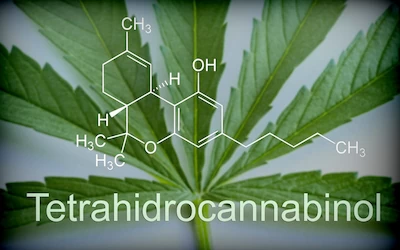
Qualifying patients may use medical cannabis under HRS §329‑122, but workplace use is prohibited; medical‑card status does not prevent employer drug testing or discipline for positive cannabis tests.
Recreational Marijuana
No statewide recreational marijuana protections; employers may lawfully test for and discipline employees for cannabis metabolites; hemp or CBD use does not require treating marijuana tests as negative.
Drug Testing Regulations
Hawaii HRS Chapter 329B regulates workplace drug/alcohol testing (public and private): licensed labs and MRO review, strict chain‑of‑custody and confidentiality, tests invalid if procedures not followed; willful violations incur $1,000–$10,000 per violation under §329B‑7.
Permitted Testing Types
Pre-Employment
Permitted if all Chapter 329B procedures and licensing requirements followed.
Random Testing
Permitted if all Chapter 329B procedures and licensing requirements followed.
Reasonable Suspicion
Permitted if all Chapter 329B procedures and licensing requirements followed.
Post Accident
Permitted if all Chapter 329B procedures and licensing requirements followed.
Workers' Compensation Discount
No workers' compensation premium discount is provided for compliance with Hawaii's mandatory drug-testing statute.
Employers must follow HRS Chapter 329B procedures; willful violations risk $1,000–$10,000 civil penalties.
Best Practices
- Comply fully with HRS Chapter 329B procedures.
- Use Hawaii-licensed or SAMHSA-approved testing laboratories only.
- Employ Hawaii-licensed medical review officers for positive-result review.
- Provide written pre-test notice about substances and medication disclosures.
- Refer positive on-site screens to licensed lab within four hours.
Clean Slate Laws
NoNo automatic clean-slate law; Act 241 (7/9/2024) created a Clean Slate Expungement Task Force (recommendations due 2027). Meanwhile HRS §378-2.5 restricts pre-offer conviction inquiries (7‑year felonies/5‑year misdemeanors); petition-based expungement continues. https://data.capitol.hawaii.gov/sessions/sessionla... https://data.capitol.hawaii.gov/sessions/sessionla...
E-Verify Requirements
VoluntaryWho Must Use E-Verify
Private Employers [No Hawaii E-Verify mandate]
Voluntary for private employers under Hawaii law; employers must still complete federal Form I-9 and follow federal immigration requirements. https://labor.hawaii.gov/ui/files/2024/08/EV-E-Res...
Federal Contractors [Federal Acquisition Regulation (FAR) E-Verify clause]
Employers with FAR E-Verify clause in federal contracts must enroll in and use E-Verify to verify employees per federal contract requirements. https://everify.uscis.gov
Any other relevant groups [F-1 STEM OPT employers; federal DHS/USCIS rules]
Employers hiring F-1 STEM OPT extension workers must be enrolled in E-Verify; other groups are governed by applicable federal statutes and USCIS/DHS rules. https://everify.uscis.gov
Background Check Regulations
Employers must follow federal FCRA plus Hawaii-specific rules: delay criminal-history questions until a conditional offer (“ban-the-box”), limit conviction lookbacks (generally 7 years for felonies, 5 years for misdemeanors), and treat arrest/court records carefully under state law.
FCRA Compliance Process
Disclosure & Authorization
Provide clear, standalone written disclosure that a background check will be conducted. Obtain separate written authorization from the applicant before ordering the report.
Obtain Background Report
Order the background check from a Consumer Reporting Agency (CRA). Ensure the CRA is FCRA-compliant and provides accurate, up-to-date information.
Pre-Adverse Action Notice
If considering denying employment based on the report, provide the applicant with:
- Copy of the background report
- Copy of "A Summary of Your Rights Under the FCRA"
- Reasonable time to respond (typically 5 business days)
Adverse Action Notice
If final decision is made to deny employment, provide written notice including:
- Name, address, and phone number of the CRA
- Statement that the CRA did not make the decision
- Notice of right to dispute report accuracy
- Notice of right to request additional free copy within 60 days