







West Virginia Employment Screening Overview
West Virginia is relatively employer-friendly for background screening, with no statewide ban-the-box, salary history ban, or credit check restrictions for private employers.
All employers must verify employment eligibility through documentation under WV Code SS 21-1B, but there is no state-mandated E-Verify enrollment requirement (HB 4759 proposing this died in the Senate in 2024). Drug testing follows specific statutory procedures under the Safer Workplace Act, and expunged records generally cannot be considered in hiring decisions.
Federal requirements may still apply, and some localities may have local fair-chance policies; employers should verify whether any local requirements affect their operations.
What's Permitted
- No statewide ban-the-box law for private employers currently
- Credit checks generally permitted with federal FCRA compliance
- Drug testing allowed under Safer Workplace Act with written policy
- Document-based employment verification required under WV Code SS 21-1B (not E-Verify specifically)
What's Prohibited
- Inquiring about expunged criminal records on employment applications
- Discriminating against employees solely for certified medical cannabis user status
- Conducting employment drug tests without written policy and SAMHSA-certified lab confirmation
- Failing to verify employment eligibility documentation for new hires under WV Code SS 21-1B
Ban the Box Laws
NoStatus Summary
West Virginia: No statewide ban-the-box. HB 4229 for public employers died: https://www.wvlegislature.gov/Bill_Text_HTML/2024_... Follow FCRA and EEOC guidance: https://www.eeoc.gov/laws/guidance/enforcement-gui... Dept. of Agriculture hiring limited by §19-1-3b: https://code.wvlegislature.gov/19-1-3b/. Federal Fair Chance Act applies to agencies/contractors.
Key Requirements
HB 4229 (Ban-the-Box Act)
Proposed 2024 public-employer ban-the-box bill: https://www.wvlegislature.gov/Bill_Text_HTML/2024_...
- Public employers only.
- Delay criminal-history questions.
- Exempts safety/legally-required roles.
- Requires individualized review criteria.
- Died in committee 2024.
W. Va. Code §19-1-3b
State statute on employment background checks: https://code.wvlegislature.gov/19-1-3b/
- Fingerprint-based state and national checks.
- Disqualify only with rational nexus.
- Prohibits moral‑turpitude disqualifications.
- Allows pre-application petition process.
- Scope may be limited to Agriculture.
Federal FCRA (background checks)
Federal background-check legal requirements: https://www.consumer.ftc.gov/articles/0152-backgro...
- Standalone written disclosure required.
- Separate written authorization required.
- Pre- and post-adverse notices required.
- Seven‑year reporting limit for some records.
EEOC Title VII guidance
Federal guidance on criminal-record use: https://www.eeoc.gov/laws/guidance/enforcement-gui...
- Warns against blanket exclusion policies.
- Requires individualized assessments.
- Consider offense, timing, job relevance.
- Watch disparate impact risk.
W. Va. Code §61-11-26 (Expungement)
State expungement rules and effects: https://code.wvlegislature.gov/61-11-26/
- Nonviolent felonies eligible for expungement.
- Waiting periods vary by offense.
- Expunged convictions not to be disclosed.
- Accelerated expungement for treatment graduates.
Ban the Box Best Practices for West Virginia Employers
- Obtain separate written disclosure and authorization for background checks.
- Provide FCRA pre‑adverse and post‑adverse action notices.
- Conduct individualized, job‑related assessments following EEOC guidance.
- Respect expungement: do not inquire or rely on expunged records.
- Verify local ordinances and federal contractor rules before asking.
Salary History Ban
NoWest Virginia — State law status
Current state law (Apr 2026):
- No statewide salary-history ban
- Employers may request prior pay
- Subject to federal anti-discrimination laws
- No local ordinances identified
- Monitor potential future legislation
Sources: https://code.wvlegislature.gov/21-5/ , https://labor.wv.gov/Wage-Hour/Pages/default.aspx
HB 2308 (2019) — Katherine Johnson Fair Pay Act
Bill summary (did not advance):
- Prohibit employer bans on wage disclosures
- Prohibit waivers denying wage discussions
- Limit salary-history inquiries from applicants
- Allow voluntary disclosures after offer
Sources: , http://www.wvlegislature.gov/Bill_Text_HTML/2019_S...
HB 2626 (2023) — Katherine Johnson and Dorothy Vaughan Fair Pay Act
Bill summary (died in committee):
- Require wage-range disclosures on request
- Ban salary-history inquiries before offer
- Allow voluntary applicant salary disclosures
- Protect employee wage discussions
- Private right of action allowed
Sources: http://www.wvlegislature.gov/Bill_Text_HTML/2023_S... ,
HB 4272 (2024) — Katherine Johnson and Dorothy Vaughan Fair Pay Act
HB 2826 (2025) — Katherine Johnson and Dorothy Vaughan Fair Pay Act
Bill summary (pending in House Judiciary as of Apr 2026):
- Require wage-range disclosures on request
- Ban salary-history inquiries before offer
- Allow voluntary applicant salary disclosures
- Protect employee wage discussions
- Prohibit retaliation for requesting wage info
Sources: https://www.wvlegislature.gov/Bill_Text_HTML/2025_... ,
Equal Pay Act (1963)
Federal baseline requirement:
- Prohibits sex-based pay discrimination
- Applies to substantially equal work
- Prior salary cannot justify discrimination
Title VII (Civil Rights Act, 1964)
Federal anti-discrimination law:
- Prohibits compensation discrimination by protected class
- Applies to employers with 15+ employees
- Salary-history reliance may cause disparate impact
Source: https://www.eeoc.gov/statutes/title-vii-civil-righ...
National Labor Relations Act
Protects employee concerted activity:
- Protects employee rights to discuss wages
- Employer cannot lawfully prohibit wage discussions
- Applies to private-sector employees generally
Source: https://www.nlrb.gov/about-nlrb/rights-we-protect/...
Salary History Best Practices for West Virginia Employers
- Confirm West Virginia has no statewide salary-history ban.
- Comply with federal Equal Pay Act and Title VII.
- Document legitimate business reasons for salary-history inquiries.
- Avoid basing offers solely on applicants' prior pay.
- Train recruiters on nondiscrimination and disparate-impact risks.
Consumer Credit Checks
NoWest Virginia has no state ban on employment credit checks; employers must follow federal FCRA (written consent, pre‑adverse/adverse notices; seven‑year limit for <$75,000). Security freezes: https://code.wvlegislature.gov/21/ https://code.wvlegislature.gov/46A-6L-102/
Key Requirements
Fair Credit Reporting Act (FCRA)
Federal rules governing employment credit reports:
- Written consent required before requesting report
- Must provide pre-adverse action notice
- Must provide final adverse action notice
- Seven-year limit for salaries under $75,000
West Virginia Code Chapter 21 (state law)
State law regarding employer credit checks:
- No statewide prohibition on credit checks
- Chapter 21 contains no credit restriction
- Employers must follow federal FCRA standards
- Check local ordinances for specifics
W. Va. Code §46A-6L-102 (security freeze)
Consumer security freeze on credit reports:
- Consumers can place security freezes
- Freeze blocks report distribution without consent
- Agencies must implement freezes within five days
- Doesn't bar checks if consumer lifts freeze
W. Va. Code §21-1B (employment verification)
Requirements to verify legal employment status:
- Employers must verify immigration and work authorization
- These rules concern eligibility, not credit
- Maintain required employment records
W. Va. Code §21-5 (wage and records)
Payroll and records retention requirements:
- Keep payroll and employment records two years
- Records must include SSN, pay rate, hours
- Statute does not restrict credit checks
W. Va. Code §16A-15-4 (medical marijuana)
Protections for registered medical marijuana users:
- Employers cannot discriminate for certified use
- Protection does not address credit history
- See W. Va. Code §16A-15-4
Credit Check Best Practices for West Virginia Employers
- Follow federal FCRA requirements before obtaining credit reports.
- Obtain standalone written authorization prior to requesting credit reports.
- Provide pre-adverse and adverse action notices with report.
- Apply FCRA seven-year lookback for positions under $75,000.
- Respect consumer security freezes; obtain consumer authorization.
Marijuana Protection
Medicinal Marijuana
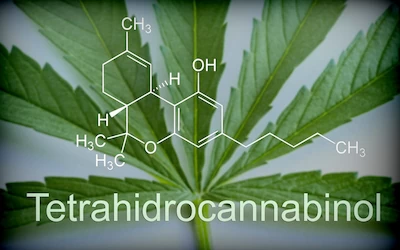
Employers may not discharge, refuse to hire, or otherwise discriminate solely due to an employee’s status as a certified medical cannabis user under the Medical Cannabis Act (W. Va. Code §16A-15-4). No required on-site use accommodation; discipline for workplace impairment allowed.
Recreational Marijuana
No West Virginia law provides employment protections for recreational marijuana use. Employers may prohibit and test for cannabinoids under written policies, and may take adverse action based on confirmed positives under the Safer Workplace Act (W. Va. Code §21-3E).
Drug Testing Regulations
WV permits drug/alcohol testing: private employers under Safer Workplace Act (§21‑3E) and public‑works contractors under §21‑1D must use written policies, certified labs and confirmatory tests; Medical Cannabis Act (§16A‑15‑4) bars discrimination solely for certified users but allows discipline for impairment.
Permitted Testing Types
Pre-Employment
Permitted under W. Va. Code §21-3E; §21-1D for public contractors.
Random Testing
Permitted under W. Va. Code §21-3E; §21-1D for public contractors.
Reasonable Suspicion
Permitted under W. Va. Code §21-3E; §21-1D for public contractors.
Post Accident
Permitted under W. Va. Code §21-3E; §21-1D for public contractors.
Workers' Compensation Discount
No statutory workers' compensation premium discount is provided for employers implementing drug-testing programs in West Virginia.
If injured while intoxicated, employees may forfeit workers' compensation indemnity benefits when employer's written drug-free policy complies with statute.
Best Practices
- Adopt a written drug-testing policy; distribute to all employees
- Use HHS/CLIA/CAP‑certified labs; confirm positives before action
- Limit specimens to urine or blood; prohibit instant POCT
- Provide notice, supervisor training, and employee confidentiality safeguards
- Respect medical cannabis status; discipline only for workplace impairment
Clean Slate Laws
NoWest Virginia uses a petition-based expungement system (WV Code §§61‑11‑25, 61‑11‑26, 61‑11‑26a): waiting periods (1–5 years), categorical exclusions, accelerated treatment pathway; no automatic sealing. Employer-immunity claim in prior research is incorrect. https://code.wvlegislature.gov/61-11-26/ https://code.wvlegislature.gov/61-11-25/
E-Verify Requirements
VoluntaryWho Must Use E-Verify
Private Employers [West Virginia Code § 21‑1B]
No — West Virginia requires document‑based verification under §21‑1B; the proposed E‑Verify mandate for 15+ employers (HB 4759, 2024) did not become law. HB 4198 (2026), the "E-Verify Safe Harbor Act," passed both chambers but is awaiting House concurrence on Senate amendments as of 14 March 2026; not yet enacted. HB 5424 (2026), the "Worker Citizenship Verification Act," is pending in committee. https://code.wvlegislature.gov/21-1B-3/ https://labor.wv.gov/Wage-Hour/Undocumented_Worker...
Federal Contractors [8 U.S.C. § 1324a; federal procurement rules]
Possibly — federal procurement rules or specific contract clauses can require E‑Verify; review FAR and agency contract requirements. https://www.e-verify.gov https://www.acquisition.gov/far
Pending Legislation [HB 4198, 2026; HB 5424, 2026]
HB 4198 (E-Verify Safe Harbor Act): passed House 10 Feb 2026, passed Senate 14 Mar 2026, awaiting House concurrence on Senate amendments. Would provide civil protections for employers using E-Verify. HB 5424 (Worker Citizenship Verification Act): introduced 10 Feb 2026, pending in House Government Organization. Would expand employer verification requirements. Neither bill is enacted.
Background Check Regulations
Federal FCRA governs employment background checks in West Virginia, but state statutes and local ordinances can add requirements or restrictions; employers must comply with both and consult counsel or a CRA to ensure state-specific obligations are met.
FCRA Compliance Process
Disclosure & Authorization
Provide clear, standalone written disclosure that a background check will be conducted. Obtain separate written authorization from the applicant before ordering the report.
Obtain Background Report
Order the background check from a Consumer Reporting Agency (CRA). Ensure the CRA is FCRA-compliant and provides accurate, up-to-date information.
Pre-Adverse Action Notice
If considering denying employment based on the report, provide the applicant with:
- Copy of the background report
- Copy of "A Summary of Your Rights Under the FCRA"
- Reasonable time to respond (typically 5 business days)
Adverse Action Notice
If final decision is made to deny employment, provide written notice including:
- Name, address, and phone number of the CRA
- Statement that the CRA did not make the decision
- Notice of right to dispute report accuracy
- Notice of right to request additional free copy within 60 days